Reading Time: 5.5 mins

June 29, 2025

Share this with your friends, family, and colleagues

Online challenges, trends or hoaxes appear frequently on social media or other online platforms. The types can vary and can often be harmless but sometimes they can be likened to dangerous pranks or dares which encourage viewers to harm themselves, others or property. Other trends may appear innocent, encouraging a type of ‘life hack’ seeking to make something easier or more enjoyable for people but can carry dangerous risks.

When an online challenge is reported in the news or media, it can be difficult to establish the facts and understand what you need to do to protect the children or young people in your care.

What Is an Online Challenge?

Challenges usually involve people recording themselves doing something difficult or silly, which they share online and encourage others to repeat. They can range from harmless to dangerous, depending on the action being carried out.

Hoax challenges are a subcategory where the challenge is fake, usually materialised through misleading social media posts. These intend to frighten the viewer and can include distressing themes such as self-harm or suicide.

Why Do Online Challenges Attract Young People?

  • They are naturally curious.
  • There is an element of excitement when taking part in something risky or trendy.
  • They believe it might help them fit in with their peers or make them feel ‘included’.
  • It’s what everyone is talking about, or they see it everywhere online as the algorithm pushes it to their feed.
  • The desire for popularity, whether that’s in person or through likes, views and follows online.
  • If they see others doing it, they think it is normal.
  • They may believe it is harmless, useful or fun.

What Are the Risks?

Challenges can involve actions that cause injury to the participant or to others nearby. In some cases, the harm can be serious or even fatal. Children and young people may not recognise the danger because viral videos rarely show the negative consequences. As a result, these risks often only gain attention after a widely reported, tragic incident.
Participating in these challenges can be addictive as there can be social pressure among young people to take part. The consequences of engaging in the activities can have long term effects, for example, if there are addictive substances involved. Additionally, some online challenges involve humiliating or harassing others online, which can have a drastic impact on the individual’s self-esteem and overall mental health.
Actions such as harassment, possession of illegal substances, or anti-social behaviour can cause offenders to face fines or even prison time.
Participation in online challenges can make them seem acceptable and contributes to the spread of them. This can perpetuate a cycle where uninformed individuals feel pressured to engage in increasingly dangerous activities to maintain status or recognition.
Social media challenges, particularly those involving illegal or harmful activities, can have long-term consequences on future opportunities, including education, employment, and relationships. Content shared online can be accessible to others indefinitely.

What Can You Do?

Stay Calm

It’s natural to feel worried or concerned, particularly if you are questioning whether a child or young person in your care is being encouraged to participate.

Engage in Calm and Open Conversations

  • Choose the right moment, where you both aren’t distracted, such as a car journey or a walk.
  • Don’t rush it or become confrontational as this can be counterproductive.
  • that encourage more than a ‘yes’ or a ‘no’ answer. For example, “why do you think people get involved in dangerous challenges?” or “Have you seen anything new trending online recently?” or “Are your friends or people at school taking part in any online trends at the moment?” or “Do you think viral videos leave out or edit out certain bits?
  • Listen, allow them time to speak, embrace the potential awkwardness of the silence rather than filling the gap and consider repeating back to them or summarising what you are hearing to affirm your understanding.
  • Show empathy and understanding and avoid lecturing, shaming or accusations, letting them know that you want them to be safe, not restrict their fun.
  • Stay specific and try and stay on topic, unless the young person wants to share more.
  • Identify a trusted team of adults to ensure that young people know which adults they can turn to if they have questions or worries relating to dangerous challenges.
  • Reassure them that they won’t face judgment or punishment for seeking help. Emphasise the seriousness of the issue while assuring them that you are available to address any concerns or questions they may have.
  • Don’t panic if they are uncomfortable, evasive or refuse to talk initially. Instead, reassure and encourage them you are here and ready to listen. Never underestimate the importance, power and hope that these conversations can have.

Consider Avoiding the Trend’s Name

Sometimes, by drawing attention to specific challenges, you can trigger a young person’s natural curiosity to find out more. Instead, ask them if they have seen any online or heard about them from a friend. Other times, it’s good to raise awareness of a trend by talking about it with your community in order to identify what it involves and the potentially dangerous behaviour it encourages.

Stay Informed

By understanding the attraction and risks, you can better support and guide the children and young people in your care.

Be Supportive and Avoid Judgement

Young people may feel awkward, embarrassed or even fearful of having this conversation. Stay supportive, plan how and when to approach the conversation and avoid panic, condemnation or any language or behaviour that could be harmful rather than helpful.

Enable Parental Controls

Together, utilise parental controls and safety settings available on the platforms they use. Talk to young people about how to block and report on platforms and how to see less harmful content. Our Online Safety Centre provides practical guides for implementing these measures.

Further Resources

Teach Hub Lesson: Understanding Online Challenges

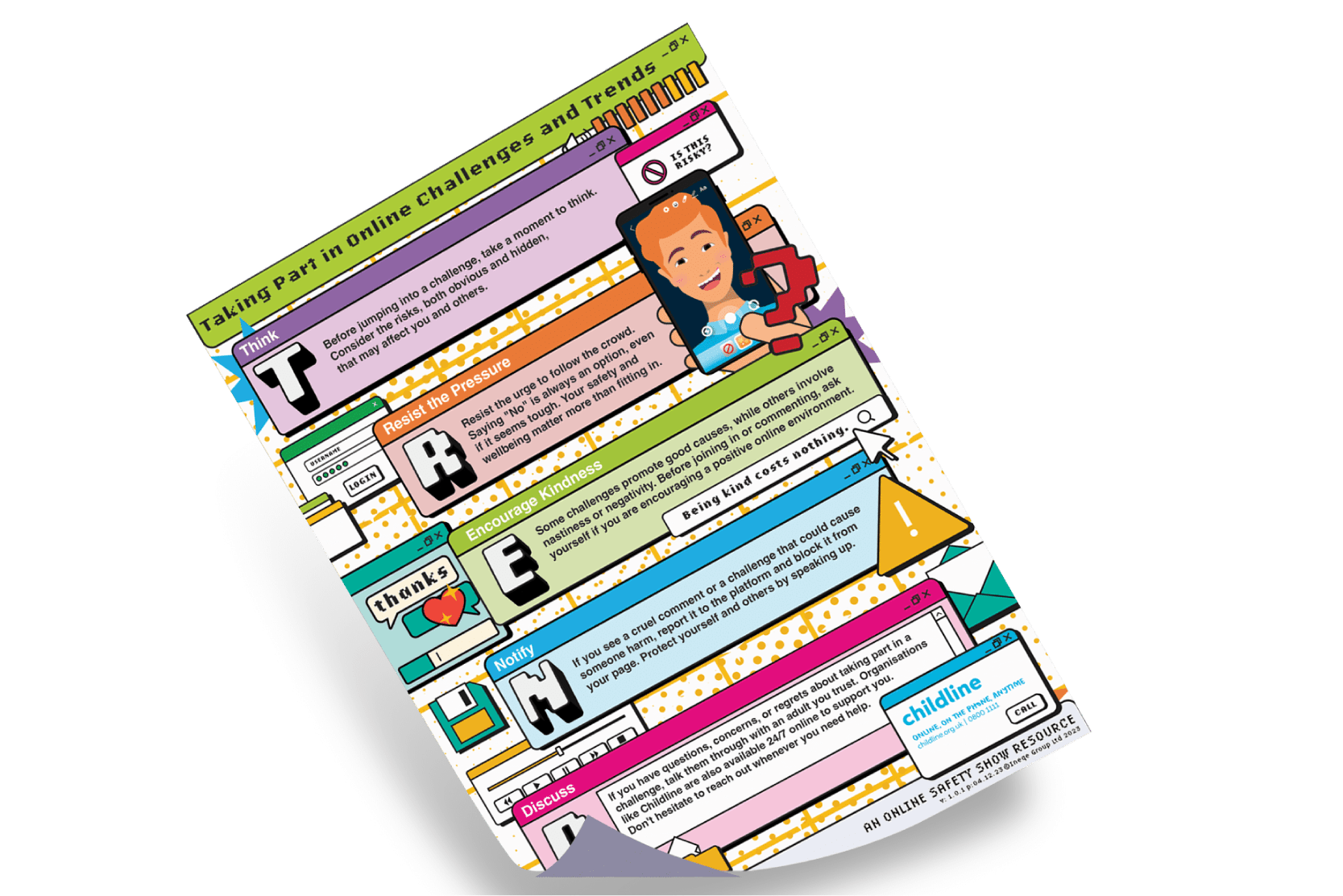
Taking Part in Online Challenges and Trends

Safety Centre: Guidance on how to block, mute and report on popular platforms.

Share this with your friends, family, and colleagues

Join our Safeguarding Hub Newsletter Network

Members of our network receive weekly updates on the trends, risks and threats to children and young people online. 

Sign Up

Who are your Trusted Adults?

The Trusted Adult video explains who young people might speak to and includes examples of trusted adults, charities and organisations.

Pause, Think and Plan

Use our video for guidance and advice around constructing conversations about the online world with the children in your care.